
“No Filipino should ever feel that they have nowhere to turn for help” — Bong Go

Habang ipinagdiriwang ng mundo ang World Mental Health Day sa Huwebes, Oktubre 10, nanawagan si Senador Christopher “Bong” Go na bigyan ng mas malaking pansin ang lumalaking hamon sa kalusugan ng isip sa Pilipinas, binibigyang-diin ang pangangailangang mapabuti ang access sa serbisyong pangkalusugan ng isip sa buong bansa. Si Go, na chairperson ng Senate Committee on Health, ay binigyang-diin na ang kalusugan ng isip ay dapat bigyan ng parehong halaga tulad ng pisikal na kalusugan, at ipinahayag na “Walang Pilipinong dapat makaramdam na wala silang matatakbuhan para humingi ng tulong.” “Ang kalusugan ay katumbas ng buhay ng bawat Pilipino at ang maayos na pag-iisip ay susi tungo sa mas produktibong buhay. Ngayong World Mental Health Day, ipakita natin ang tunay na malasakit sa ating kapwa anuman ang kanilang pinagdadaanan at iparamdam na hindi sila nag-iisa,” kanyang paliwanag. Ang panawagan ni Go ay nagbibigay-diin sa pagpapatupad ng Republic Act No. 11036, ang Philippine Mental Health Act, na nangangakong magbigay ng access sa mga serbisyong pangkalusugan ng isip para sa lahat ng Pilipino, lalo na sa mga nasa malalayong lugar at hindi gaanong naaabot. Ang batas na ito, na nilagdaan noong administrasyong Duterte, ay nagtutulak para sa pagsasama ng mga programa sa kalusugan ng isip sa mga barangay at komunidad. “We must ensure that mental health services reach even the farthest barangays. Early intervention can save lives,” diin ni Go. Isa sa pinakamahalagang alalahanin ni Go ay ang mga hamon sa kalusugan ng isip na nararanasan ng kabataan. Ipinapahayag niya na ang mga estudyante ay kabilang sa mga pinaka-vulnerable, kaya’t isinusulong niya ang pagpasa ng Senate Bill No. 2598, na naglalayong magtatag ng mga Mental Health Offices sa mga pampublikong higher education institutions (HEIs). “Imagine being a young student, battling anxiety or depression, and not knowing where to turn. We need to create safe spaces for these students, places where they can seek help without judgment,” sabi ni Go, na siya ring chairperson ng Senate Committee on Youth. Kung maipasa, ang SBN 2598 ay mag-uutos sa mga HEIs na magtayo ng mental health offices na may mga dedicated hotlines at mga bihasang counselor, upang magbigay ng agarang tulong sa mga estudyanteng nangangailangan. Binigyang-diin din ni Go ang suicide prevention measures ng panukalang batas, na binibigyang-priyoridad ang maagang pagtuklas at interbensyon para sa mga estudyanteng nasa panganib. Bukod sa pagtutok sa higher education, si Go ay co-author at co-sponsor ng SBN 2200, ang panukalang Basic Education Mental Health and Well-Being Promotion Act. Ang batas na ito, na pangunahing ini-sponsor ni Senador Sherwin Gatchalian, ay naglalayong isama ang mental health education sa sistema ng basic education ng bansa, upang matiyak na ang suporta sa kalusugan ng isip ay magsimula sa murang edad. “Mental health isn’t something we should only discuss when a crisis arises. It must be part of our everyday conversations—at home, in schools, in workplaces. By normalizing mental health education, we can prevent crises before they happen,” paliwanag ni Go. Ang SBN 2200 ay nagmumungkahi rin ng isang mental health curriculum para sa parehong pampubliko at pribadong paaralan, upang bigyan ng kakayahan ang mga batang estudyante na maunawaan ang kanilang mga emosyon, harapin ang stress, at humingi ng tulong kapag kinakailangan. Ang dedikasyon ni Go sa pagpapalawak ng mga serbisyong pangkalusugan ng isip ay lumalampas sa sistema ng edukasyon. Bilang pangunahing awtor at sponsor ng RA 11959, o ang Regional Specialty Centers Act, binigyang-diin ni Go kung paano inoobliga ng batas ang pagtatayo ng mga specialty centers sa loob ng mga Department of Health (DOH) regional hospitals, kabilang ang mga specialized mental health services. “Mental health care should never be a privilege. It’s a right. With these efforts, we are bringing quality mental health services closer to the people,” ani Go. Ang pagtatayo ng Regional Specialty Centers ay isang mahalagang hakbang sa decentralization ng serbisyong pangkalusugan ng isip, na titiyakin na ang mga Pilipino sa mga probinsya ay hindi na kailangang maglakbay ng malayo upang makakuha ng specialized care. Sa nakaraan, pinuri rin ni Go ang 2024-2028 Philippine Council for Mental Health (PCMH) Strategic Framework ng Department of Health, na sinuportahan ng World Health Organization (WHO). Ang framework ay naglalatag ng isang ambisyosong estratehiya upang tugunan ang mga hamon sa kalusugan ng isip sa bansa, na nakatuon sa pagpapabuti ng patient guidance at referral systems, pagtatatag ng mga oversight boards na nakatuon sa kalusugan ng isip, at pag-eeduka sa media tungkol sa responsableng pagbabalita. “This is a battle we must fight together. Too many people suffer in silence because of shame or fear. We need to create an environment where asking for help is seen as a strength, not a weakness,” diin ni Go. Kilalang “Mr. Malasakit” dahil sa kanyang compassionate brand ng serbisyo publiko, muling pinagtibay ni Go ang kanyang dedikasyon sa paglilingkod sa mga Pilipino: “Nandirito lang ang inyong Senator Bong Go, na handang magserbisyo sa inyo sa abot ng aking makakaya. We will continue to push for reforms that bring mental health care closer to our people because no one should ever feel alone in this fight.”
Pinalawak na Benepisyong Pangkalusugan para sa mga Pilipino, Inilunsad ng PhilHealth
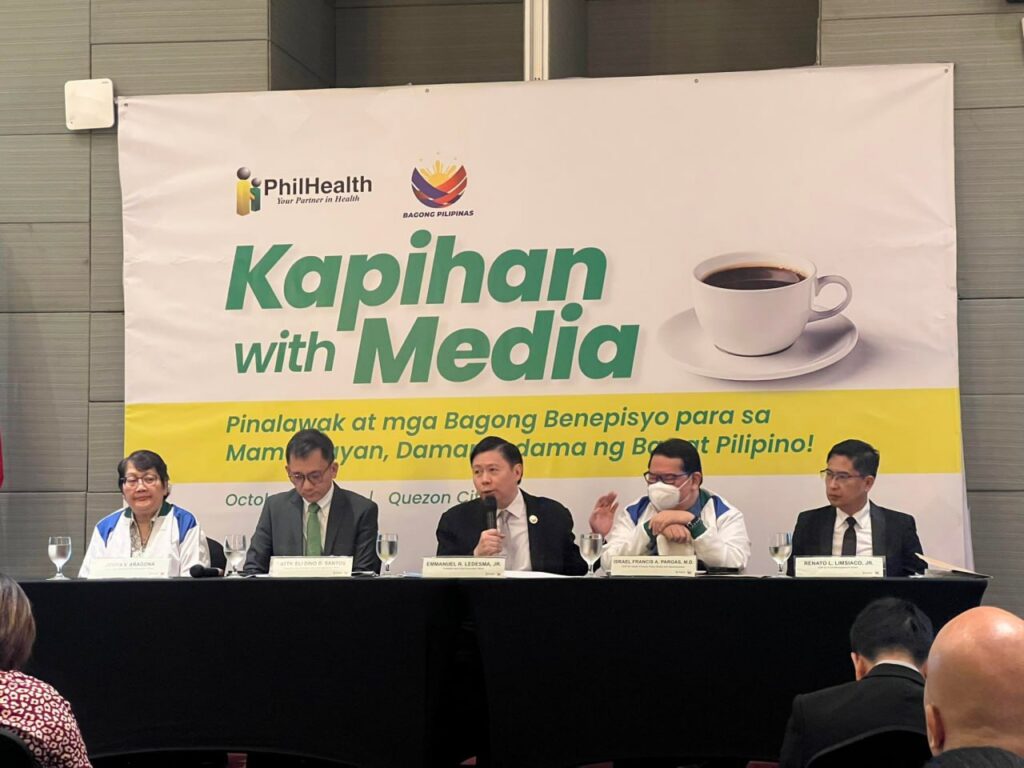
Patuloy na tinutupad ng PhilHealth ang kanilang misyon na bigyan ng de-kalidad na serbisyong pangkalusugan ang bawat Pilipino sa pamamagitan ng kampanyang “Pinalawak at mga Bagong Benepisyo para sa Mamamayan, damang-dama ng bawat Pilipino.” Ang hakbang na ito ay bahagi ng hangarin ni Pangulong Ferdinand “Bongbong” R. Marcos, Jr. na palakasin ang sistema ng kalusugan sa bansa. Layunin ng programang ito na matiyak na ang bawat Pilipino, anuman ang estado sa buhay, ay makakakuha ng kinakailangang serbisyong medikal nang hindi iniisip ang malaking gastusin. “Ito ang mensahe ng PhilHealth sa ating mga kababayan, huwag po kayong matakot sa gastos sa pagkakasakit, sagot kayo ng PhilHealth!” pahayag ni Emmanuel Ledesma, Jr., Pangulo ng PhilHealth. Ayon kay Ledesma, nakatuon ang PhilHealth sa pagpapalawak ng coverage para sa mga pangunahing sakit sa Pilipinas, gaya ng pneumonia, malalang dengue, stroke, sakit sa bato, at iba’t ibang uri ng kanser. Sa ngayon, 60% ng mga kondisyong ito ay sakop na ng mas pinalawak na benepisyo. Kabilang dito ang mas mataas na case rates para sa pneumonia, hika, stroke, neonatal sepsis, at chronic kidney disease na nangangailangan ng hemodialysis. Sa taong 2025, palalawakin pa ang tulong para sa mga pasyenteng may lung, liver, ovary and prostate cancer, lalo na ang mga sumasailalim sa chemotherapy. Bilang bahagi ng Universal Health Care (UHC) program, inaasahang tataas din ang tulong pinansiyal sa iba pang malulubhang sakit. Layunin nito na maiwasang bumagsak sa kahirapan ang mga pamilya dahil sa malalaking gastusing medikal. Ipinagmamalaki rin ng PhilHealth na ang Pilipinas ang kauna-unahang bansa sa Asia-Pacific na naglunsad ng isang outpatient therapeutic care package para sa Severe Acute Malnutrition noong Oktubre 1. Layunin ng benepisyong ito na labanan ang malnutrisyon sa mga bata at bawasan ang pasaning pinansyal ng mga pamilyang apektado nito. Bilang karagdagan, inalis na rin ang patakaran sa Single Period of Confinement (SPC) upang matulungan ang mga miyembrong nangangailangan ng tuloy-tuloy na gamutan. Tataas din ng 59% ang benepisyo para sa hemodialysis mula P4000 na magiging P6,350 sa darating na Nobyembre. Dahil dito ay aabot na sa halos Php 1 milyon kada taon ang benepisyo sa bawat apektadong pasyente. Kasabay ng pagpapalawak ng benepisyo, gumagamit din ang PhilHealth ng makabagong teknolohiya upang mapabuti ang kanilang mga serbisyo. Nakipagtulungan sila sa Department of Information and Communications Technology (DICT), Department of Health (DOH), at Philippine Statistics Authority (PSA) upang mas mapadali ang proseso ng mga serbisyo ng PhilHealth, lalo na para sa mga nasa malalayong lugar. Pinalawak din ang programang “Konsulta” na nagbibigay ng libreng konsultasyon, diagnostic tests, at mga gamot batay sa rekomendasyon ng duktor upang matulungan ang mga Pilipino na mapanatiling malusog bago pa man magkasakit. Sa pagtatapos, nanawagan ang PhilHealth sa mga healthcare providers na makipagtulungan upang masiguro na madadama ng bawat Pilipino ang pinalawak na benepisyo ng PhilHealth sa pamamagitan ng pagbaba ng kanilang bayarin pang- medikal. “Sama-sama nating itaguyod ang isang mas malusog at matatag na Pilipinas” panawagan pa ni Ledesma.
Sen. Robin, Inendorso ng Kandidatura ng Mga ‘Baguhan’ para sa Senado
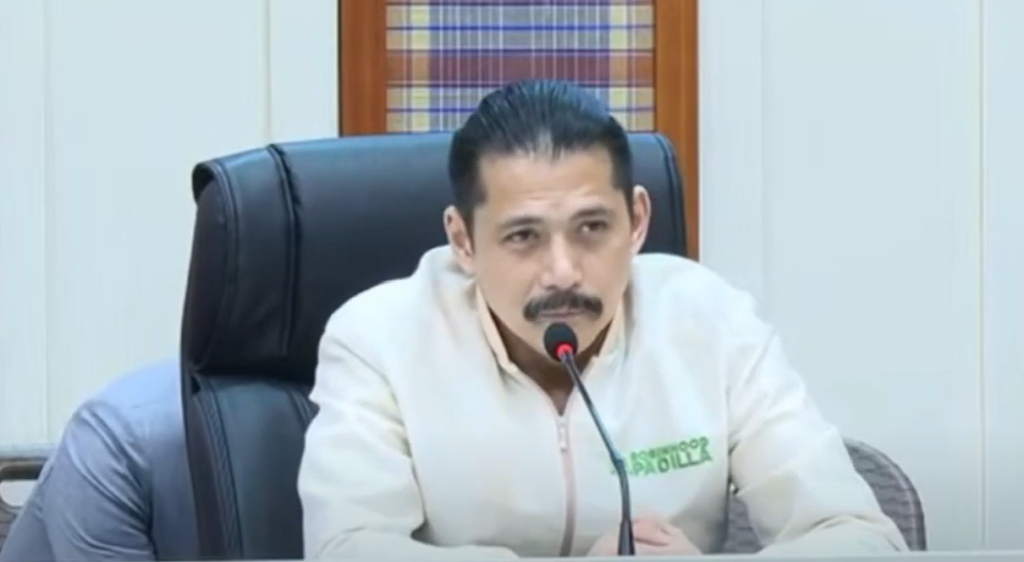
Buong suporta ang ibinigay ni Sen. Robinhood “Robin” C. Padilla para sa pagtakbo ng mga baguhan para sa Senado. Nitong Lunes, sinamahan ni Padilla si dating Interior Undersecretary Jesus “Jayvee” Hinlo Jr., na naghain ng certificate of candidacy (COC) sa Commission on Elections (Comelec). “What are my legislative programs when elected senator? First will be our fight against corruption. Second will be our fight against poverty. Third, reform in our education system,” ani Hinlo, na trial lawyer sa Bacolod City at deputy secretary general for Visayas ng PDP-Laban. Nanawagan siya ng pag-amyenda sa Data Privacy Act at Bank Secrecy Law para mapadali ang pag-imbestiga ng kasong katiwalian. Isinulong din niya ang pagkaroon ng “Philippine Patriotism and Ethics Studies” mula Grade 1 hanggang kolehiyo para tiyaking may tunay na pagmamahal sa bayan ang mga Pilipino. Sa administrasyong Duterte, nagsilbi si Hinlo bilang Undersecretary for Public Safety ng Department of Interior and Local Government. Nagsilbi din siya bilang myembro ng Land Bank of the Philippines board; at Commissioner ng Presidential Anti-Corruption Commission. Pang-limang senatorial candidate si Hinlo ng PDP-Laban. Noong nakaraang linggo, sinamahan ni Padilla ang apat pang senatorial bet ng partido, kasama si Phillip Salvador, Bong Go, Bato dela Rosa, at Jimmy Bondoc. Sinamahan din ni Padilla nitong Lunes sa Comelec si Greco Belgica, na tatakbo sa Bisaya Gyud party list.
Bong Go demands action on PhilHealth’s unfulfilled promises: expand benefits, prioritize preventive care

On Wednesday, October 2, Senator Christopher “Bong” Go, chairperson of the Senate Committee on Health and Demography, led another Senate hearing demanding action from PhilHealth on its unfulfilled promises. Go has been pushing for immediate reforms, emphasizing the need to fix outdated policies, expansion of benefits, increase case rates, lower premium contributions, provide free medicines, and also prioritize preventive care packages. The senator also welcomed the announcement of PhilHealth’s Board of Directors to officially scrap the Single Period of Confinement Policy, which had been in effect since 2013. The senator commended the scrapping of the policy saying, “Salamat naman po at finally ini-scrap niyo na, tinanggal niyo na itong single period of confinement policy,” he said. “Sulit po ang ating pangungulit at hindi po ako titigil na kukulitin kayo bilang Chairman po ng Committee on Health.” He also proposed specific areas for expansion of PhilHealth benefits, including dental and optical care, which are currently lacking in PhilHealth’s coverage. Go shared a story about Filipinos in rural areas resorting to makeshift methods for dental care due to the lack of proper services. “’Yung iba, sinulid ginagamit pantanggal ng ngipin sa bundok, sa bukid, sa amin, sa probinsya,” he said. Go further challenged PhilHealth to be proactive in preventing illnesses rather than simply covering expensive treatments after worsen conditions. He noted that many Filipinos are afraid to seek medical care due to the potential cost, even though they are PhilHealth members. “Marami po na mga kababayan nating Pilipino ang takot magpa-check up dahil wala pong pambayad, walang coverage ng PhilHealth,” Go said. Citing studies on visual impairment and oral health in the Philippines, Go also proposed that PhilHealth should expand its benefits to include preventive measures such as regular eye check-ups and dental cleanings. Throughout the hearing, Go was firm in holding PhilHealth accountable for the promises made in previous hearings. He reminded PhilHealth President and CEO Emmanuel Ledesma of the commitment to increase case rates by 50% by the end of November and to expand benefits such as dental care by December. “Asahan po ninyo na tututukan po natin ito at hinding-hindi tayo papayag na mapako ang ipinangakong ito ng PhilHealth sa taumbayan. You are under oath when you delivered your promises to the people. And this Committee will hold you to your promise,” Go warned. Go also brought up several policy suggestions aimed at expanding PhilHealth’s coverage and making healthcare more accessible to all Filipinos. One of the key reforms he advocated for was the inclusion of prescription glasses, wheelchairs, crutches, and other assistive devices under PhilHealth’s coverage. He specifically noted that the current policy of requiring hospital admission for PhilHealth coverage is impractical and unrealistic. “Napapansin ko kailangan i-admit muna ng isang araw para i-cover ng PhilHealth. Mas gastos yun kasi magbabayad sila sa kwarto,” he explained, suggesting that outpatient services should also be covered by PhilHealth to reduce costs. Additionally, Go pointed out the inadequacies in PhilHealth’s maternity care packages, where the current PhP8,000 coverage is far from the actual cost of around PhP40,000 for normal delivery. He called for increased benefits for treatments related to the top 10 leading causes of death in the Philippines, particularly heart disease, diabetes, and pneumonia. Go also addressed gaps in healthcare coverage for serious illnesses, specifically advocating for expanded support for cancer patients. He proposed the inclusion of “wholeness treatment” for cancer patients, a comprehensive approach where multiple medical professionals work together to support a patient’s well-being. “Isa pang polisiya na sana pag-aralan niyong mabuti, please lang PhilHealth… Isa lang po ito sa mga maraming sakit. Di naman po ako doktor pero common sense lang po yan. Dami pong sakit na pwede niyong tugunan. Dami pong sakit na pwede niyong tulungan na maisalba ang buhay ng Pilipino,” Go remarked. Another major point discussed during the hearing was the need for a stronger information campaign to raise public awareness about the services PhilHealth offers. Go highlighted that many Filipinos are unaware that they are members of PhilHealth or do not fully understand the benefits available to them. “Yung iba nga po hindi nila alam, miyembro pala sila ng PhilHealth,” Go said, stressing the importance of making sure that all Filipinos are informed about the services offered by the government especially in terms of healthcare. One of the more contentious topics discussed during the hearing was the management of PhilHealth’s funds. Go strongly opposed the transfer of Php89.8B excess funds to the national treasury, insisting that these funds should be used solely for healthcare purposes. “Kaya nga po tinututulan natin ang pag-transfer ng PhilHealth funds sa national treasury dahil ang PhilHealth po ay para sa health,” Go said, reinforcing that PhilHealth’s financial resources must be used directly to benefit the public and should not be held idle while people suffer. He also questioned why PhilHealth was requesting additional subsidies for 2025 despite having substantial reserves. In his closing remarks, Go did not mince words when it came to holding PhilHealth and other government agencies accountable for their promises. “We must all act with an extreme sense of urgency kasi buhay po ang nakataya dito,” Go stated. “Kailangan ng common sense po dito. Dapat may puso ka, may malasakit ka sa kapwa mo Pilipino,” he remarked. Go also made it clear that the Senate hearings on these issues will continue as long as necessary to ensure that the concerns of the Filipino people are addressed. “Tatlong hearing na po about PhilHealth… hindi po tayo titigil. Kung kailangan linggo-linggo,” Go said. Given the absence of PhilHealth President Ledesma for health reasons, Go reminded PhilHealth officials that they are public servants entrusted with the health and well-being of millions of Filipinos. “Please shape up, gamitin niyo po ang pondo ninyo para sa mga mahihirap nating kababayan. Pera po ng tao yan. Hindi niyo po pera yan,” he concluded.
“Ipaglalaban ko ang kapakanan ng bawat Pilipino sa abot ng aking makakaya” — Bong Go expresses gratitude for strong performance in latest senatorial surveys

Senator Christopher “Bong” Go has expressed profound gratitude to the Filipino people for their continued trust and support after being ranked among the top senatorial candidates in the latest Pulse Asia survey for the 2025 elections. According to the results released by Pulse Asia conducted from September 6 to 13, Go is in the 4th to 9th spot, with 40.3% of voters indicating him as one of their preferred senatorial choices. In response to these latest numbers, Go shared his appreciation for the trust placed in him, reiterating his commitment to continue serving the nation. “Sa ating mga kababayan, lubos po akong nagpapasalamat sa inyong tiwala at suporta. Ang inyong pagsuporta ay nagbibigay inspirasyon upang mas pagbutihin ko pa ang aking pagseserbisyo,” Go stated. He further emphasized that his public service would remain steadfast, especially in providing for the most vulnerable Filipinos. “Hinding-hindi ko po sasayangin ang pagkakataong magserbisyo sa bayan. Sisiguraduhin kong sa abot ng aking makakaya, patuloy kong ipaglalaban ang kapakanan ng bawat Pilipino,” he added. Go’s role as chairperson of the Senate Committees on Health, on Sports, and on Youth has solidified his reputation as a champion for the health and well-being of Filipinos. He is widely known for his key initiatives, including Republic Act No. 11463 or the Malasakit Centers Act of 2019, which institutionalized the Malasakit Centers program. Go’s efforts in healthcare extends further with the development of Super Health Centers across the country. These centers are equipped to provide primary healthcare and early disease detection, crucial to ensuring the health and well-being of Filipinos in remote areas. Additionally, he is the principal sponsor and one of the authors of RA 11959, or the Regional Specialty Centers Act, which mandates the establishment of regional specialty centers within existing Department of Health regional hospitals. Go is also among the key authors and co-sponsors of RA 11589, or the Bureau of Fire Protection Modernization Act, and RA 11641, which led to the creation of the Department of Migrant Workers. Go is also a passionate advocate of grassroots sports development, recognizing its vital role in the youth’s personal growth and societal well-being. He played a key role in creating the National Academy of Sports (NAS) by authoring and co-sponsoring RA 11470. Located in New Clark City, Capas, Tarlac, NAS combines secondary education with a sports-focused curriculum, offering a dual path for student-athletes to excel in their sports and academic endeavors. Meanwhile, Go also reflected on the guiding principles passed on to him by former President Rodrigo Duterte. “Noong ako’y personal aide pa lamang ni Tatay Digong, lagi kong naririnig sa kanya: ‘Do what is right.’ At sa ngayon, iyon ang patuloy kong isinasabuhay. Ang kapakanan ng Pilipino ang laging inuuna,” Go emphasized. He assured the Filipino public of his unwavering commitment to continue serving, regardless of the challenges that may come. “Bilang inyong Mr. Malasakit, nais kong patuloy na magserbisyo, lalo na sa mga mahihirap. Bisyo ko po ang magserbisyo at naniniwala ako na ang serbisyo sa tao ay serbisyo sa Diyos,” Go added passionately. Aside from his high rank in the Pulse Asia survey, Go has consistently ranked well in other national surveys. Notably, the OCTA Research survey for the same election also placed Go in the top tier of preferred senatorial candidates. In the OCTA survey conducted from August 28 to September 2, Go ranked 3rd to 6th, securing 49% of voter preferences.
Sen. Robin’s Resolution Salutes Crew of BRP Teresa Magbanua
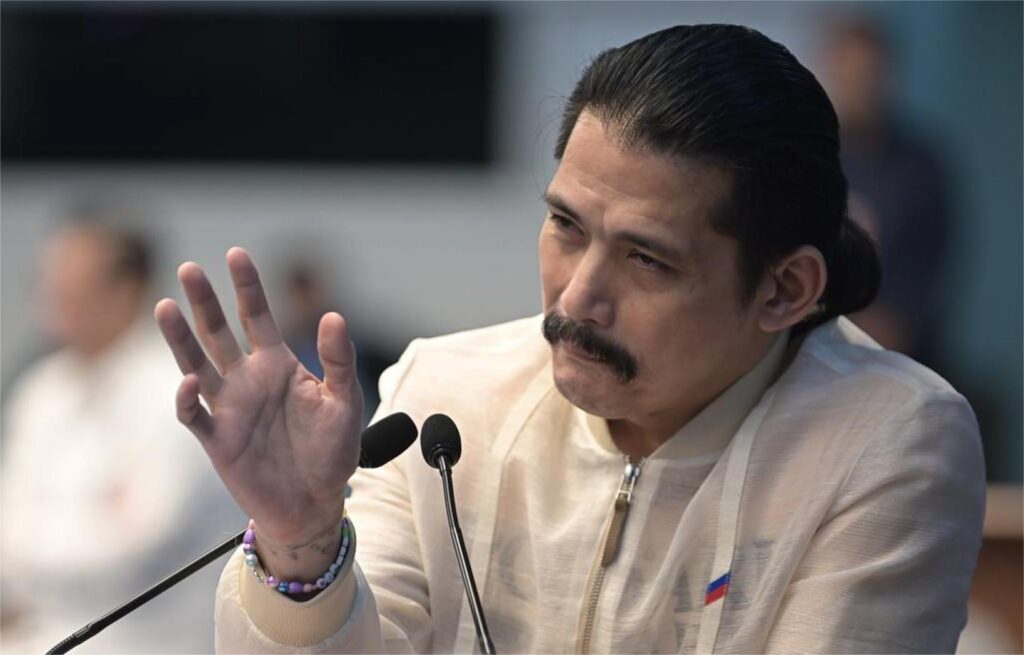
For enduring harassment and hardships while maintaining the Philippines’ presence in the West Philippine Sea, the crew of the BRP Teresa Magbanua were saluted by Sen. Robinhood “Robin” C. Padilla. In Senate Resolution 1202, Padilla cited the BRP Teresa Magbanua’s crew for their “crucial and immeasurable contribution” to maintaining our sovereignty. “The crucial and immeasurable contribution of the officers and crew of the BRP Teresa Magbanua should be recognized and commended,” he said in his resolution, which was filed Tuesday evening. In April 2024, the Philippine Coast Guard deployed the BRP Teresa Magbanua (MRV09701) to monitor China’s reclamation activities in the West Philippine Sea, as well as maintain the Philippines’ presence there. Despite harassment and intimidation attempts by Chinese vessels – including an intentional ramming by a Chinese Coast Guard vessel – the BRP Teresa Magbanua did not leave the area. As part of its harassment efforts, the CCG even blocked rotation and reprovisioning missions, forcing the crew to settle for lugaw, boiled rainwater and droplets from the vessel’s airconditioning system. BRP Teresa Magbanua was forced to leave Escoda Shoal last Sept. 15 and return to Puerto Princesa Port due to weather conditions, depleted supplies and damage to the vessel – aside from the medical condition of some of its crew. “Resolved, as it is hereby resolved, that the Senate of the Philippines commends and lauds the brave men and women of the Philippine Coast Guard on board the BRP Teresa Magbanua for their dedication and commitment to protect the sovereign rights of the Philippines over the West Philippine Sea,” Padilla stressed.
Bong Go Scrutinizes DSWD’s Validation of Beneficiaries
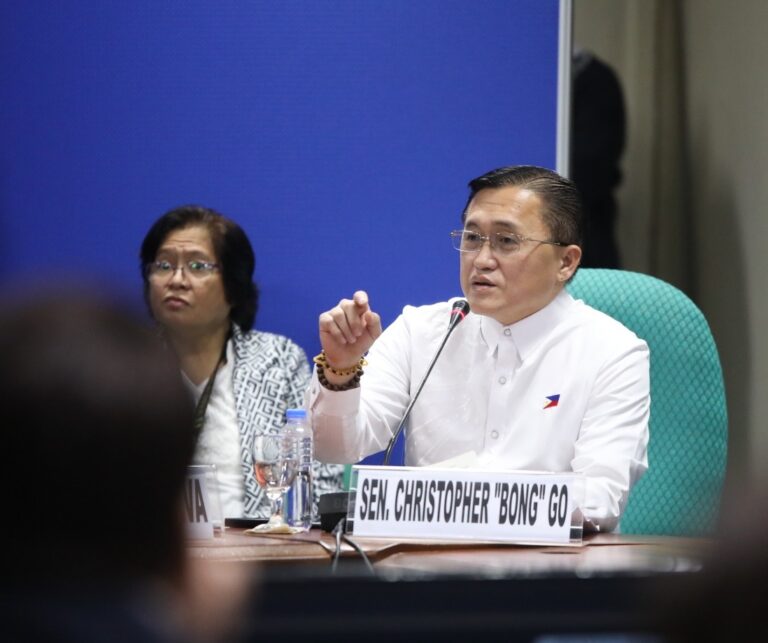
Senator Christopher “Bong” Go raised concerns during the Senate Committee on Finance deliberations on the Department of Social Welfare and Development’s (DSWD) budget on Monday, September 16, about the accuracy and efficiency of the department’s efforts to validate beneficiaries of their social programs. As one of the Vice Chairs of the Senate Finance Committee, he questioned if intended beneficiaries of DSWD’s programs, especially the poor and the vulnerable, are given needed attention and immediate action by the department to help them overcome poverty, crises and economic challenges. Go made it clear that he remains a staunch supporter of the DSWD’s initiatives to uplift the marginalized sectors of society as long as such programs are implemented properly without politics and delays. “I want to express my support to the programs of the Department of Social Welfare and Development, which play a crucial role in uplifting the lives of the marginalized and vulnerable sectors in our society,” Go said, acknowledging the DSWD’s efforts under previous and current administrations. “Even during the time of former President (Rodrigo) Duterte, sinusuportahan talaga natin ito at lalo-lalo na nakatutulong sa mga mahirap nating kababayan na mga programa,” Go remarked in his opening statement. However, he pointed out that DSWD must ensure that these programs and assistance reach those who need government attention the most. One of the major points raised by Go during the hearing was regarding the Assistance to Individuals in Crisis Situation (AICS) program. Go questioned the department on the proper utilization of the budget and remove any unnecessary hardships for individuals seeking aid. Go shifted the discussion to issues with cash availability, particularly in disaster-stricken areas, where the need for immediate assistance is critical. “Kumusta naman ‘yung cash ninyo ngayon? Parati natin narinig na walang cash dun sa mga lugar na… maraming regions doon na walang cash. ‘Yung may mga bagyo na regions, walang cash. Pero ‘yung mga walang bagyo, may cash,” he pointed out. In response, DSWD Secretary Rex Gatchalian explained that the lack of cash availability in certain areas was not due to a shortage of funds but rather the absence of Special Disbursing Officers (SDOs). He clarified that these officers, who are responsible for withdrawing and distributing cash, are limited by the department’s plantilla positions. This explanation, however, was met with skepticism by both Go and Marcos, with Marcos highlighting that despite the presence of manpower in NCR, there are still persistent complaints about delays in fund disbursement in the region. Gatchalian assured the committee that the department is working to address these issues and that funds will be made available in disaster-stricken areas. Another critical point Go raised was the follow-up on the validated list of beneficiaries from the previous year’s hearing, specifically those affected by the 2023 typhoons. Go expressed frustration at the delays in providing aid to these qualified individuals, stating that nearly a year had passed without a resolution. He recalled how Gatchalian had assured the Senate in September 2023 that payouts for qualified beneficiaries would be made promptly. Gatchalian acknowledged the delays but explained that the department had faced challenges in validating the lists provided by various LGUs. Go pressed Gatchalian on this issue, urging the department to ensure that assistance reaches qualified beneficiaries without further delay. “Basta qualified naman po. Kayo naman po nakakaalam. ‘Di naman tayo nakikialam d’yan sa listahan kung sinong pagbibigyan n’yo ng tulong. Basta qualified po, mga mahirap,” Go emphasized. Go further stressed that it is the DSWD’s responsibility to ensure that qualified individuals receive assistance they need to overcome challenges. “Ako, sinusuportahan ko talaga ‘yung programa ng DSWD ever since po at sa mga nakakatulong sa mga mahirap. Pero pakiusap lang, alamin po ninyo kung sino ‘yung mga mahirap, at huwag pahirapan. Sigurado po kayo na lahat ng nabibigyan ay mahihirap?” Go asked firmly. Go emphasized that he supports the DSWD’s programs, provided that they are executed properly and without political influence. He reiterated that the department’s primary mission is to assist poor Filipinos, and any delays in distributing aid could have severe consequences for those who direly need government assistance. “Mandato po ng DSWD na tulungan po ang mga mahirap nating kababayan. Unang-una, pera po ito ng taong bayan. Dapat po ibalik po ito sa kanila,” Go stated. Go also pointed out his efforts to institutionalize programs like AICS through legislation. He mentioned Senate Bill No. 2638, which he filed to ensure the proper and timely implementation of the AICS program by institutionalizing it if enacted into law. “Unahin po natin ‘yung mga mahirap nating kababayan. ‘Yan naman po ang ginagawa noon ng DSWD. Sana po panindigan niyo po ang inyong sinasabing ‘Bawat Buhay Mahalaga’ po sa DSWD,” Go appealed to Gatchalian and the DSWD team. Furthermore, Go also underscored the importance of ensuring that the department’s programs are free from political influence, urging the DSWD to stay true to its mandate of helping the marginalized and crisis-stricken communities. “Ibalik n’yo po sa kanila. At DSWD po ang may kakayahan na departamento na ibalik po sa kanila. At walang halong politika. Do not be selective,” Go firmly concluded, expressing his hope that the DSWD would continue its work to support Filipinos in need.
AkoOFW assails bid to revive e-sabong

RAISING funds to defray the cost of government programs and projects need not come from sources deemed as dubious, says an advocate group representing migrant workers. In a statement, Advocates and Keepers Organization AKO OFW Inc. chairman Dr. Chie Umandap likewise assailed efforts to revive the so-called e-sabong, an online betting scheme embarking on cockfighting. By his own admission, Umandap agreed that the government is duty-bound to raise funds to cover the cost of education, health and infrastructure among many other government programs. He, however, finds it rather immoral for the government to revive what has already been restricted in view of documented social damages. “In my humble opinion, there are other ways where we can generate revenue, and definitely legalization of e-sabong is not one of them,” Umandap said. Citing inside information, the AKO-OFW chair took a swipe at what appears to be a well-funded lobbying operation primarily designed to sway the Philippine Congress to come up with a resolution which would effectively allow the controversial e-sabong. During a budget hearing conducted by the House Committee on Appropriations, Philippine Amusement and Gaming Corporation (PAGCOR) chairman Al Tengco hinted at the need to raise more funds, alluding to the P6 billion annual revenue that the government has been missing in view of the ban imposed on e-sabong. “Definitely, sayang din po yung nawalang income. Well, we have studied it and have a few suggestions, and we believe we can enhance the structure or the guidelines [that] were then before. But until a law or an order [from the] President of the Philippines comes out, our hands are tied,” Tengco told the committee. However, Umandap finds it rather improper to revive a dubious online betting scheme which has inflicted more insurmountable social damages, even as he insisted that cockfight betting should be limited inside the cockpit arena. “Ang e-sabong ay isang klase ng sugal na pumapasok sa pamamahay ng pamilyang Pilipino… nakakasama at nakakasira sa lipunan. Ang sabong ay dapat sa sabungan lang, hindi sa bawat bahay ng ating kababayan.” “Marami na ang nabaon sa pagkakautang dahil dito, maging sa ibang bansa,” he added, in reference to the predicament of some overseas Filipino workers who sought help from the AKO-OFW group so they could go back to the Philippines after ending up as e-sabong big losers.
Filipinos online frown on SONA, cite lack of concerns on OFWs, jobs
While the ban on POGO and the issue on West Philippine Sea were highlights of the recent State of the Nation address (SONA), Filipinos online are more interested to hear about salary increase in the government, and welfare protection of Overseas Filipino Workers, according to the latest scan of Facebook posts conducted by Capstone-Intel Corp. The research and intelligence firm said there were 3,212 posts about SONA based on the two-day scan of publicly available Facebook pages from July 22 to July 23, 2024, which gained a total of 418,769 reactions and an engagement score of 119,646.4. Malacanang’s RTVM livestream of President Marcos’ SONA gained the highest engagement score of 10,297. But comments were mixed, with some praising the President’s achievements, while others criticized him for lack of good service and protection for OFWs. One of the comments to RTVM’s livestream stated: “Walang maayos na serbisyo sa OFWs. Kailangan namin ng proteksyon, hindi koleksyon.” The Facebook post of the Department of Budget and Management on President Marcos’ announcement regarding salary increase for government workers for 2024 and additional medical allowance starting next year was ranked second in the highest engagement score of 7,831.5. However, a post by the Philippine Star about President Marcos’ announcement on the ban of all POGO effective July 22, 2024 ranked only third in engagement score at 4,805.2. Engagement score is computed as (Comments + Reactions)0.1 + Shares. Atty. Nicasio Conti, chief executive officer of Capstone-Intel Corp. said while there is a high interest in SONA, a large number of Filipinos online were expecting concrete plans of President Marcos particularly on creating more jobs, decent wages and livelihoods. He said given the attention on the livestreams of SONA, Filipinos are indeed interested to hear more from the President during the SONA. “However, the engagement scores of Facebook scan on SONA showed that Filipinos are more interested on issues directly affecting them such as employment and medical benefits, as well as improving the lives of our OFWs and their families,”said Atty. Conti. Meanwhile, a Facebook post by ABS-CBN on the statement of Vice President Sara Duterte’s boycott of President Marcos’ SONA gained the highest “ haha”2,501.5 engagement score. One of the comments to the Facebook post stated: “What a drama for the next presidential elections…” Majority of the reactions on SONA posts were positive, with 48.6 percent “like” and 29 percent “love” reactions from the 418,769, while there were 0.3 percent “sad,” and 0.5 percent “angry.” Atty. Conti, who served as commissioner for the Presidential Anti-Graft Commission (PAGC) said he POGO issue had gained satisfactory attention for the past months, reflecting a high interest among Facebook users. **** For more information and interview opportunities regarding surveys, you may contact Capstone-Intel’s Research and Publications Director, Ella Kristina Domingo-Coronel at 09565711298. Capstone-Intel is a high-impact research company that uses innovative research technologies, tools, and methods to convert data and information into breakthrough insights and actionable intelligence outputs. It is committed to helping its clients solve problems, find solutions, grow markets and constituencies, build reputations, navigate risks, manage crises, and be the country’s leading private research and intelligence agency.
The post Filipinos online frown on SONA, cite lack of concerns on OFWs, jobs appeared first on Capstone-Intel.
The New Election Landscape in 2025
The post The New Election Landscape in 2025 appeared first on Capstone-Intel.